Despite significant advances, regenerative medicine still faces critical limitations. Traditional methods often struggle with inefficient cellular communication and an inability to fully replicate the body’s natural healing processes. Patients with chronic injuries or degenerative diseases are left with limited options, and the promise of proper regeneration remains unfulfilled.
Enter Regenerative Protein Array (RPA) technology – a groundbreaking innovation poised to revolutionize the field. By harnessing the unique regenerative properties of placenta-derived proteins, RPA offers unprecedented potential to enhance cellular communication and accelerate tissue repair. This transformative technology bridges the gaps left by conventional treatments. It paves the way for a new era in regenerative medicine, where the body’s innate healing capabilities can be fully realized.
Regenerative Protein Array (RPA) is a collection of proteins extracted from the human placenta, known for their regenerative properties. These proteins are organized into an array for therapeutic use, particularly in regenerative medicine.
Brief History and Development of RPA Technology
Early Research: In the early 2000s, researchers discovered the regenerative potential of placental proteins, recognizing their ability to stimulate cell growth and differentiation.
Advancements: By the 2010s, improved extraction and purification techniques enabled precise isolation of these proteins while preserving their bioactivity.
Formation of the Array: In the late 2010s, scientists developed the array format to enhance the synergistic effects of the proteins, allowing for targeted therapeutic applications.
Clinical Trials: Early 2020s clinical trials showed promising results in treating chronic wounds, orthopedic injuries, and degenerative diseases, demonstrating significant improvements over traditional treatments.
Current and Future Directions: RPA technology is now at the forefront of regenerative medicine, with ongoing research exploring its potential in neurology, cardiology, and oncology. This technology promises new hope for patients with previously untreatable conditions.
Process of Extracting Proteins from the Placenta
Collection: The process begins with collecting placental tissue, typically after childbirth, from donors who have given informed consent.
Preparation: The collected placental tissue is thoroughly cleaned and processed under sterile conditions to remove contaminants and non-essential components.
Extraction: The cleaned tissue undergoes a series of biochemical processes to break down the cellular structure and release proteins. Standard methods include enzymatic digestion and centrifugation.
Purification: The extracted proteins are then purified to remove residual cellular debris and other impurities. Techniques such as filtration, chromatography, and electrophoresis are commonly used to achieve high purity levels.
Isolation: Specific proteins are isolated based on their unique properties, such as molecular weight and charge. This step ensures that the most effective proteins for regenerative purposes are selected.
Array Formation: The isolated proteins are then organized into an array format. This structured arrangement enhances their synergistic effects and allows for precise treatment application.
Role of These Proteins in Cellular Communication and Tissue Regeneration
Cellular Communication:
Signal Transduction: Proteins derived from the placenta play a critical role in signal transduction, the process by which cells respond to external signals. They bind to receptors on the cell surface, initiating a cascade of intracellular events that alter cell behavior.
Growth Factors: Many of these proteins act as growth factors, signaling cells to proliferate, differentiate, or migrate to areas that need tissue repair.
Cytokines: Placental proteins also include cytokines, which modulate the immune response and facilitate cell communication to coordinate healing.
Tissue Regeneration:
Cell Proliferation: The proteins stimulate cell division, increasing the number of cells available for tissue repair and regeneration.
Angiogenesis: Some proteins promote the formation of new blood vessels, a process known as angiogenesis, which is crucial for supplying nutrients and oxygen to healing tissues.
Extracellular Matrix Formation: They help synthesize and remodel the extracellular matrix, providing structural support for new tissue growth.
Stem Cell Activation: Certain placental proteins can activate resident stem cells, encouraging them to differentiate into the specific cell types needed for tissue repair. By leveraging these proteins’ natural roles in cellular communication and tissue regeneration, RPA technology enhances the body’s ability to heal itself, making it a powerful tool in regenerative medicine.
How Cells Communicate:
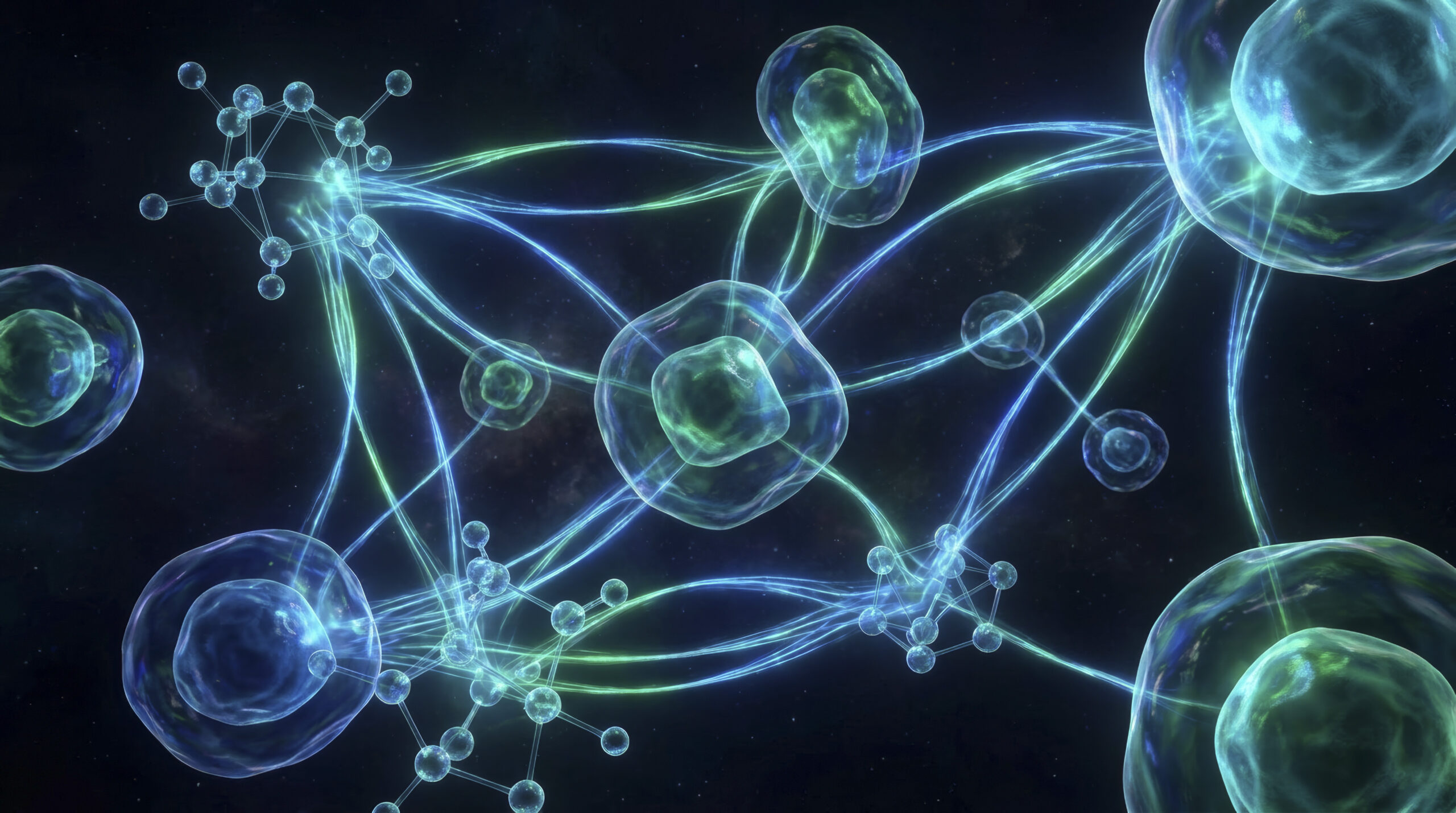
Cells communicate with each other through a process known as cellular signaling. This intricate system allows cells to convey information, coordinate activities, and maintain homeostasis within an organism. The primary modes of cellular communication include:
Direct Contact: Cells can interact directly through cell junctions or cell-to-cell contacts, where molecules on one cell’s surface bind to receptors on another cell’s surface.
Paracrine Signaling: Cells release signaling molecules into the extracellular space, affecting nearby target cells. This localized communication is essential for processes like immune responses and tissue repair.
Autocrine Signaling: Cells produce signaling molecules that bind to receptors on their surface, providing feedback and self-regulation.
Endocrine Signaling: Hormones are released into the bloodstream and travel long distances to reach target cells throughout the body. This type of signaling is crucial for maintaining physiological balance and coordinating complex bodily functions.
Synaptic Signaling: Neurons communicate with each other and with other cell types through synapses. Neurotransmitters are released into the synaptic cleft and bind to receptors on the adjacent cell, enabling rapid and specific communication.
Importance of Signaling Molecules and Receptors
Signaling Molecules:
Types of Signaling Molecules:
Hormones: Chemical messengers released by endocrine glands to regulate various physiological processes.
Growth Factors: Proteins that stimulate cell proliferation and differentiation and are essential for development and tissue repair.
Cytokines: Small proteins that modulate immune responses and mediate communication between immune cells.
Neurotransmitters: Chemicals released by neurons to transmit signals across synapses.
Extracellular Matrix Proteins: Molecules that provide structural support and influence cell behavior.
Role of Signaling Molecules:
Initiate Responses: Signaling molecules bind to specific receptors on target cells, triggering a series of intracellular events that lead to a physiological response.
Regulate Functions: They regulate various cellular functions, including metabolism, growth, immune responses, and apoptosis (programmed cell death).
Coordinate Activities: By transmitting information between cells, signaling molecules ensure that cellular activities are coordinated and adapt to changes in the internal and external environment.
Receptors:
Types of Receptors:
Cell Surface Receptors: Located on the cell membrane, these receptors bind to signaling molecules that cannot cross the cell membrane. Examples include G-protein-coupled receptors, ion channel receptors, and enzyme-linked receptors.
Intracellular Receptors: Found inside the cell, typically in the cytoplasm or nucleus, these receptors bind to signaling molecules that can cross the cell membrane, such as steroid hormones.
Role of Receptors:
Specificity: Receptors provide specificity to cellular communication, ensuring that only target cells with the appropriate receptors respond to a particular signaling molecule.
Signal Transduction: When receptors bind a signaling molecule, they undergo conformational changes that initiate a signal transduction pathway, leading to the desired cellular response.
Regulation: Receptors can be regulated by receptor desensitization, downregulation, or upregulation, allowing cells to fine-tune their sensitivity to signaling molecules.
Cellular communication is fundamental to multicellular organisms, enabling cells to coordinate activities, respond to environmental changes, and maintain homeostasis. Signaling molecules and receptors play a crucial role in this process, with signaling molecules acting as messengers and receptors as gatekeepers that initiate and regulate cellular responses. Understanding these mechanisms is essential for advancing regenerative medicine, where manipulating cellular communication can lead to innovative treatments and therapies.
Applications of RPA in Various Fields of Regenerative Medicine
Wound Healing:
Chronic Wounds: RPA technology has shown significant promise in treating chronic wounds, such as diabetic ulcers and pressure sores. RPA proteins enhance cellular communication and stimulate new tissue growth, leading to faster, more effective healing.
Surgical Wounds: In surgical settings, RPA can be applied to reduce recovery times and improve wound-healing quality. The proteins help in minimizing scarring and promote the regeneration of healthy tissue.
Orthopedic Injuries:
Bone Regeneration: RPA proteins have been used to stimulate bone growth and repair in cases of fractures and other bone injuries. They promote osteoblast proliferation and differentiation, the cells responsible for bone formation.
Cartilage Repair: RPA can support cartilage regeneration in conditions such as osteoarthritis. The proteins support chondrocyte growth, which is essential for maintaining healthy cartilage tissue.
Cardiovascular Repair:
Heart Tissue Regeneration: Damaged cardiac tissue cannot regenerate after a heart attack. RPA technology can enhance heart tissue repair by promoting the growth of new cardiac cells and improving the function of existing ones.
Vascular Health: RPA proteins can also contribute to the formation of new blood vessels, known as angiogenesis, which is crucial for restoring blood supply to damaged tissues.
Neurological Applications:
Nerve Regeneration: In cases of nerve damage from injury or disease, RPA can facilitate nerve regeneration. The proteins promote neuron growth and differentiation and support the repair of neural pathways.
Neurodegenerative Diseases: Research is ongoing to explore the potential of RPA in treating neurodegenerative diseases such as Parkinson’s and Alzheimer’s. The proteins’ regenerative properties could help slow disease progression and improve neuronal function.
Skin Regeneration:
Burn Treatment: RPA technology has been applied to treat severe burns. The proteins help rapidly regenerate skin cells, reducing recovery time and improving the quality of new skin formation.
Cosmetic Applications: Beyond therapeutic uses, RPA is also being explored in cosmetic treatments to enhance skin rejuvenation and reduce the signs of aging by promoting collagen production and skin cell turnover.
Organ Regeneration:
Liver Regeneration: For patients with liver damage or diseases such as cirrhosis, RPA can support liver tissue regeneration. The proteins support the proliferation of hepatocytes, the liver’s primary cells, improving liver function.
Kidney Repair: Researchers are studying RPA for its potential to repair damaged kidney tissue and enhance the regeneration of nephrons, the kidney’s functional units.
Stem Cell Therapy:
Enhancing Stem Cell Function: RPA proteins can improve the efficacy of stem cell therapies by enhancing stem cell differentiation and proliferation. This is particularly useful in treatments aimed at regenerating various tissues and organs.
Tissue Engineering: In tissue engineering, RPA can create scaffolds that support the growth of new tissues. The proteins signal cells to proliferate and organize into functional tissue structures.
RPA technology revolutionizes regenerative medicine by providing powerful tools to enhance tissue repair and regeneration across various medical fields. Its applications range from wound healing and orthopedic repairs to cardiovascular and neurological treatments. As research continues, RPA’s potential to transform regenerative medicine and improve patient outcomes grows, offering new hope for conditions once considered untreatable.